Events
PPWR
Published on:
Last Updated

Vivian Loftin
Co-Founder & Managing Director

Key Takeaways
The PPWR timeline demands immediate data execution: With the August 2026 deadline for substance restrictions (such as strict concentration limits on PFAS and heavy metals) fast approaching, the time for theoretical regulatory discussion is over. Manufacturers must treat compliance as an evolving data curve and immediately begin mapping their packaging portfolios.
The Declaration of Conformity is an architectural challenge: Generating a PPWR-compliant Declaration of Conformity is merely the highly visible "tip of the iceberg". Successfully securing market access requires building an integrated, automated data foundation capable of centralizing the deep layer of technical documentation required beneath the surface.
EPR eco-modulation is today's financial reality check: Long before 2030 targets kick in, companies are facing an unprecedented global financial impact from Extended Producer Responsibility (EPR) and Environmental Fees. Today's fragmented reality of country-specific bonus and malus fees serves as the ultimate operational testing ground for the exact data granularity needed for future PPWR alignment
Introduction
On Friday, 26th June 2026, we hosted our latest exclusive event, the Recyda Business Breakfast, at the Malzfabrik Köln in Cologne, Germany. This invite-only gathering brought together approximately 30 packaging sustainability executives from across the FMCG sector and the wider packaging value chain.
As companies seek to understand how to prepare for PPWR compliance ahead of upcoming regulatory deadlines, the morning focused on breaking down data silos, navigating immediate operational challenges, and uncovering the financial realities hidden beneath eco-design requirements.
Beyond the presentations, the event provided an open, collaborative forum for industry professionals to benchmark their strategies, exchange practical solutions, and network over coffee.
In this recap, we highlight the core presentations and major strategic insights shared during the event.
The ROI of Sustainability: Navigating Hidden Costs and Financial Gains
Jürgen Dornheim, Executive Industry Advisor (former Director Corporate Packaging Innovation & Sustainability at Procter & Gamble)
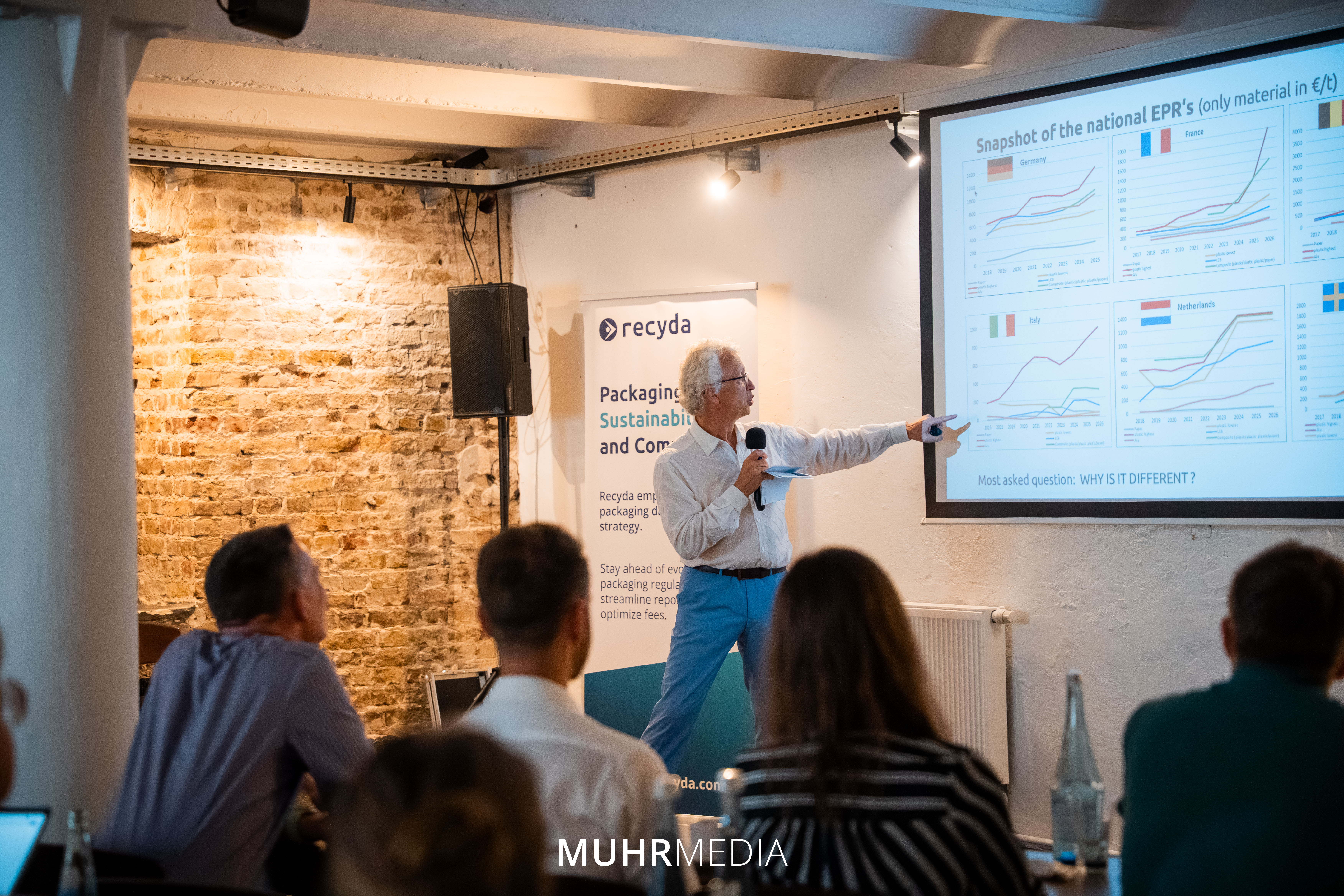
We kicked off the morning's presentations with Jürgen Dornheim, who brought decades of corporate experience to the stage. Jürgen perfectly set the scene by diving straight into the complex financial realities of modern packaging regulations, shifting the conversation from a purely ecological duty to a strategic business case. He emphasized that the global financial impact of Environmental Fees and Taxes (EFT) and Extended Producer Responsibility (EPR) frameworks has reached an unprecedented scale, making compliance an absolute boardroom priority for multinational brands.
Key points he shared included:
The major cost drivers are evolving: Historical packaging reporting focused almost exclusively on total tonnage and broad material categories. Today, corporate financial exposure is increasingly dictated by highly specific national eco-modulation criteria, linking a company's bottom line directly to eco-design choices.
A deeply fragmented regulatory landscape: EPR fee structures remain severely disconnected across international markets, as shown by rapid adjustments in country-specific criteria. Using various consumer product formats as examples, Jürgen illustrated how individual European countries apply highly variable bonuses and penalties based on polymer transparency, color, and specific material classifications.
The data quality bottleneck: The greatest friction point for corporate compliance teams is not the strictness of the laws, but poor internal master data. Generic material definitions (such as overloading a catch-all "Others" category), legacy typos, and missing component weights for labels or adhesives create vulnerabilities.
Jürgen concluded his talk with an urgent operational truth: The industry needs clean and correct master data. Leaving manual, fragmented Excel spreadsheets behind in favor of integrated digital platforms is no longer just a trend. It is a baseline requirement to reduce manual full-time equivalent (FTE) hours, secure precise accuracy, and simulate the cost structures of alternative packaging concepts before they ever hit the production line.
Development of Sustainable Packaging for Oral Solid Medicines
Modestino Guerriero, Global Device & Packaging Development Expert Engineer at Novartis
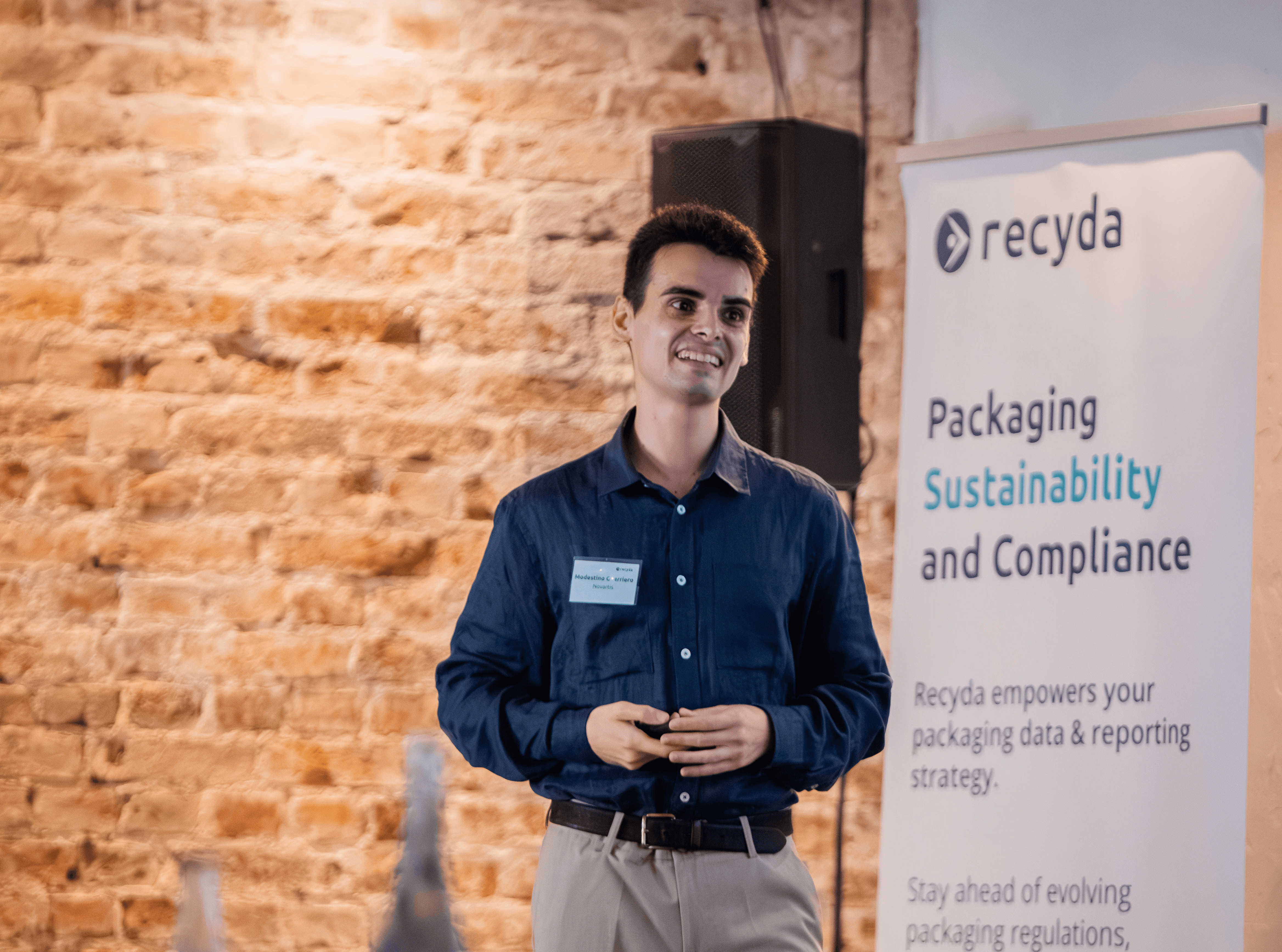
Modestino shared an inside look at how a global pharmaceutical leader approaches the complex intersection of strict medical product requirements and environmental sustainability goals. Guided by a corporate commitment to achieve net-zero greenhouse gas emissions across its value chain by 2040, Novartis has established strict circular economy and design principles.
Key milestones and technical case studies shared included:
The strategic phase-out of PVC: Driven by a strict corporate commitment to halve operational waste, Novartis is executing a clear roadmap to eliminate PVC from its packaging, systematically transitioning oral solid drug formats toward highly recyclable mono-polymer alternatives.
Iterative optimization with Recyda: Modestino demonstrated how their team used Recyda's software to re-engineer a traditional pharmaceutical HDPE bottle. While the original multi-material components initially triggered a low-performing "Class F" recyclability rating based on RecyClass standards, iteratively simulating design modifications in the software allowed them to resolve material incompatibilities and secure a "Class A" rating across Europe.
Proven financial and carbon gains: Transitioning to optimized mono-materials delivered a powerful internal business case. The sustainable redesigns yielded blister packaging weight reductions, which drove an average 43% reduction in calculated EPR fees alongside striking reductions in carbon emissions.
The Path to August 2026 and Beyond: Automating PPWR Compliance from Data to Declaration
Christian Resch, Pre-Sales Engineer at Recyda
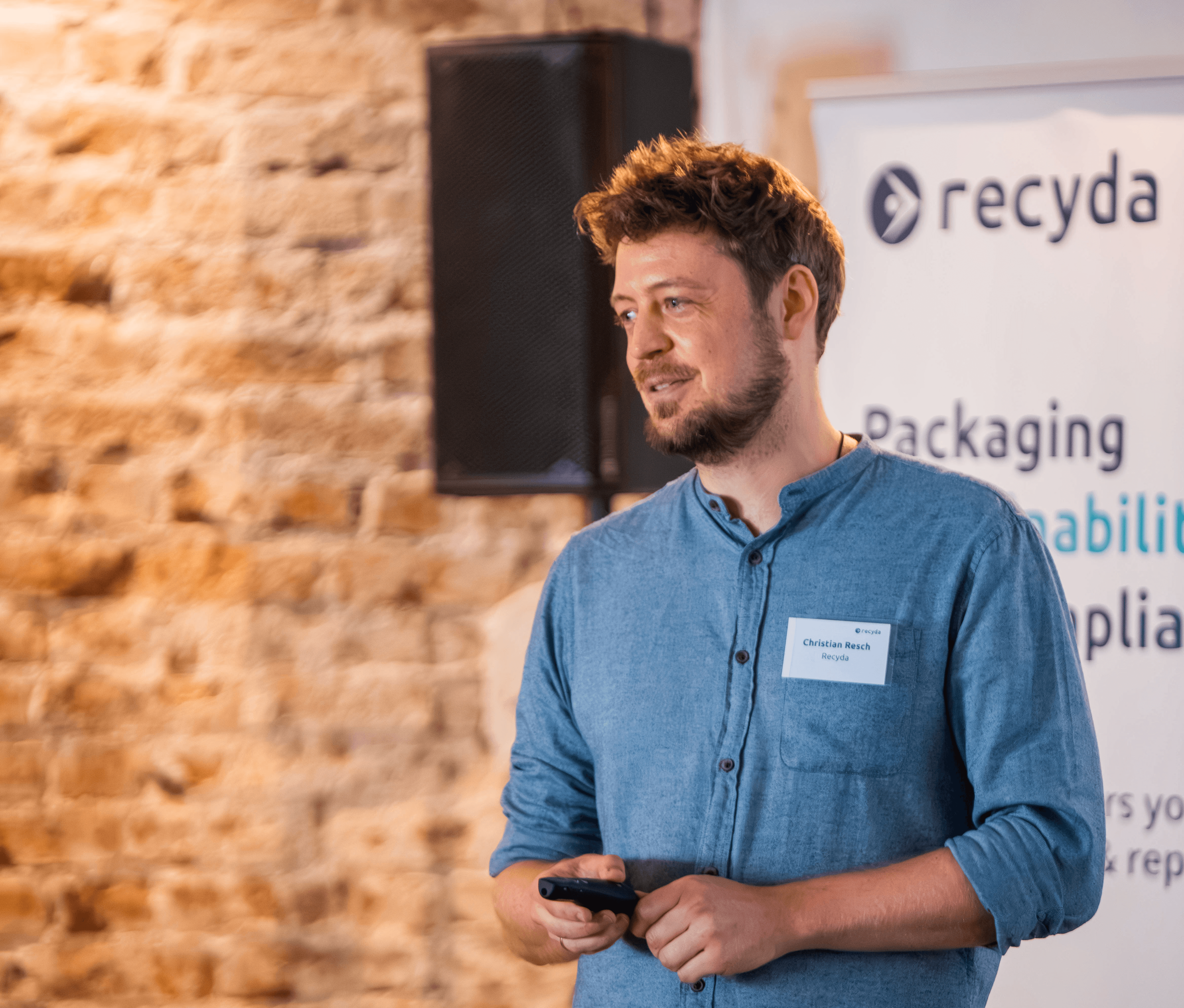
Christian reframed the noisy industry discourse surrounding the EU’s Packaging and Packaging Waste Regulation (PPWR), by shifting the focus to immediate operational execution. With major regulatory deadlines fast approaching, he emphasized that generating compliance declarations must be treated as a rigorous data architecture challenge rather than a last-minute administrative task.
Key insights from his presentation included:
Compliance Beyond the 'Tip of the Iceberg': Christian explained that while the signed Declaration of Conformity is the highly visible "tip of the iceberg," the true weight of compliance lies beneath the surface, requiring a robust foundation of technical drawings, lab results, and supplier evidence to secure compliant documentation.
PPWR as an Evolving Data Curve: Instead of a static compliance checkbox, the regulatory timeline represents a shifting data curve that will evolve over the coming years. Over time, it will gradually move from initial document collection to highly granular component attributes and strict recyclability performance grades.
Automating Portfolios at Scale: For enterprise brands managing thousands of SKUs, compliance can only be sustained through mass data automation, enabling companies to map complex data models and surface portfolio gaps continuously.
To show how this works in practice, Christian gave the audience a live demo of our Recyda PPWR Navigator solution, demonstrating firsthand how companies can seamlessly ingest entire packaging portfolios, link critical supplier evidence, and mass-generate compliant declarations in real time.
Interactive Deep-Dive: Fact, Friction, or Fiction? The Packaging Reality Check
Moderated by Vivian Loftin, Co-Founder & Managing Director at Recyda
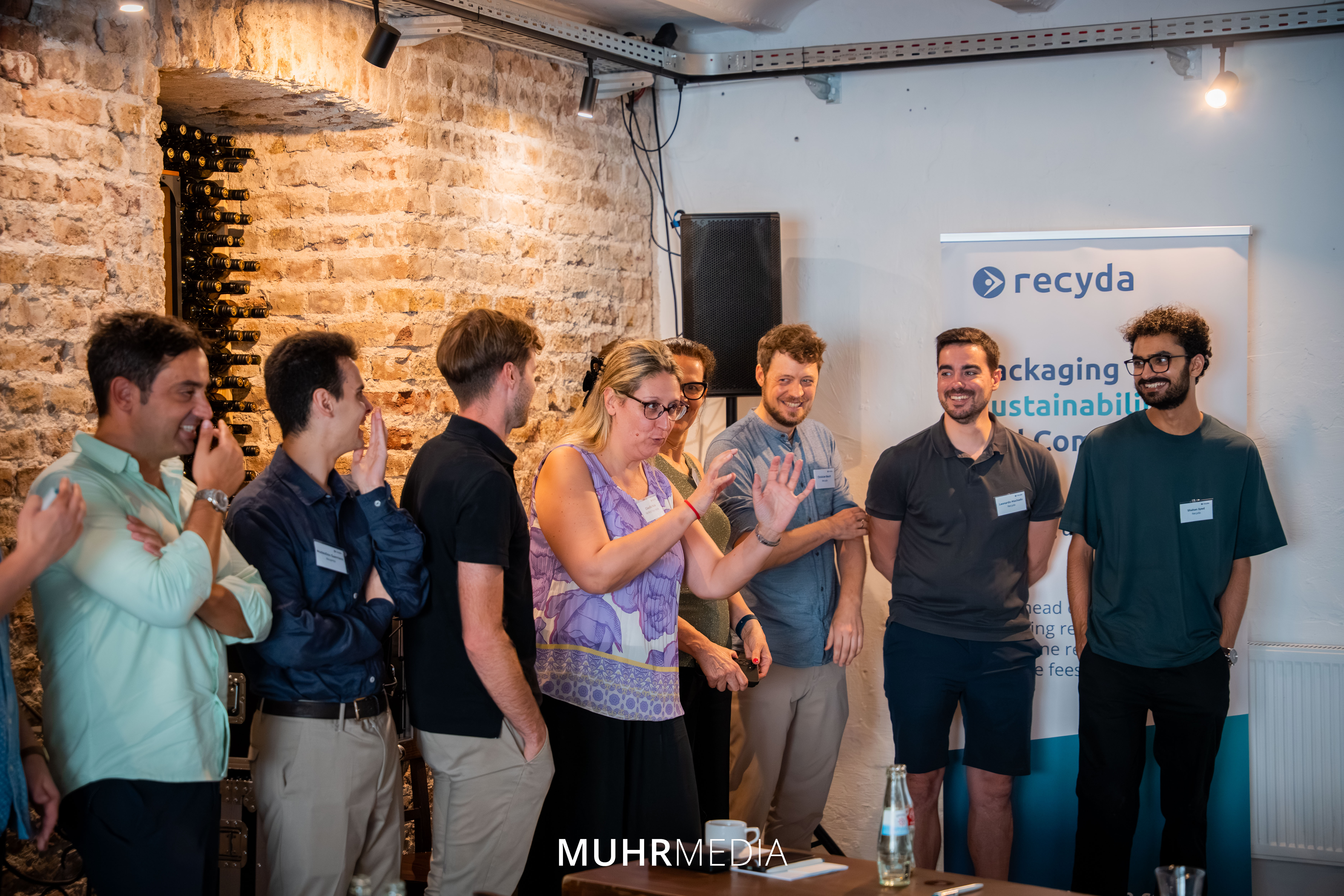
The event concluded with an interactive deep-dive session designed to prompt discussion about the daily operational friction points confronting modern packaging professionals. Rather than listening passively, participants were asked to take immediate sides—agree or disagree—on a series of thought-provoking industry statements.
The room debated several topics, including whether:
National eco-modulation of EPR fees is truly an effective driver of sustainable eco-design, or merely an added layer of administrative complexity.
The current PPWR timeline provides companies with an adequate buffer to prepare their technical systems and source supplier evidence for compliance.
Suppliers provide sufficient data today to ensure compliance assessments can be performed with confidence.
Excel can still be considered a viable tool for corporate packaging compliance in today's multi-jurisdictional landscape.
The discussions highlighted a shared consensus among attendees: while perfect data may not exist today, waiting to act is no longer an option. Brands must run gap analyses on their existing data models immediately and actively engage their supplier networks, as a corporate declaration is only as robust as the technical documentation supporting it.
Conclusion
The June 2026 Business Breakfast highlighted that packaging sustainability has officially matured from a theoretical corporate talking point into a disciplined, data-driven practice. From centralizing fragmented master data to modeling the complex financial rules of European EPR systems and automating immediate PPWR evidence, a continuous data ecosystem is what ultimately secures global market access.
We extend our sincere thanks to our expert keynotes, Jürgen Dornheim and Modestino Guerriero, and to all of our attendees for their open communication, valuable insights, and collaborative spirit. Thank you for actively partnering with us as we pave the way toward a digital, automated, and compliant packaging future.